
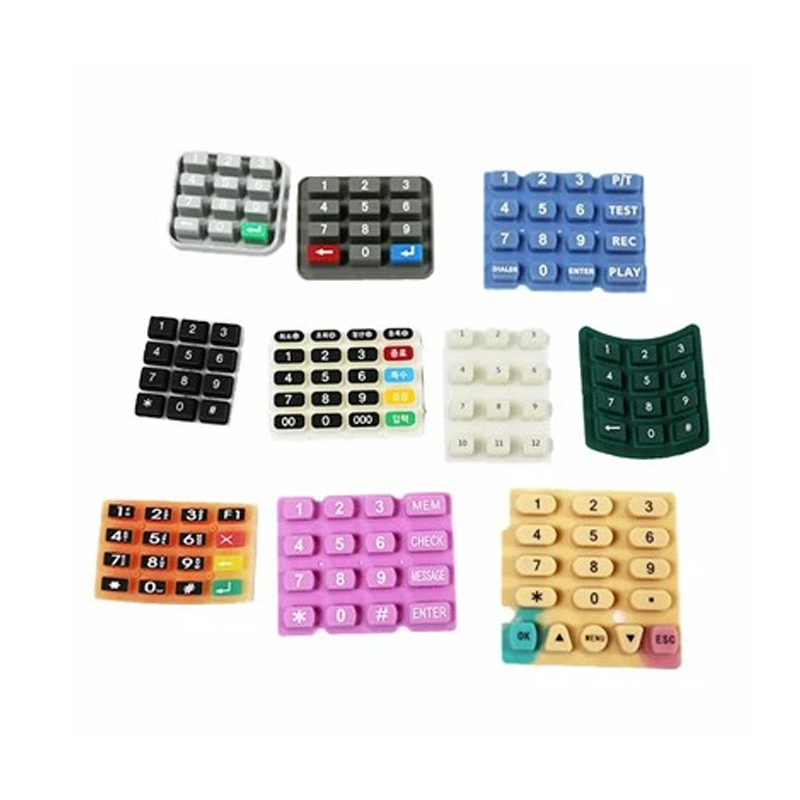
In today’s competitive manufacturing landscape, Human Machine Interface (HMI) keypads play a far greater role than just enabling operation—they directly shape how customers experience and connect with your product. A keypad that feels responsive, looks visually aligned with your brand, and performs consistently under demanding conditions can make all the difference. At Milosilicone, we believe that designing and producing custom silicone rubber keypads is more than just a technical process—it’s about building long-term trust with your customers by combining high quality manufacturing, design-for-manufacturing (DFM) expertise, and a true one-stop service model.
In this article, we’ll explore everything you need to know about silicone rubber keypads—from the unique properties of silicone elastomer to advanced customization techniques like pad printing and laser etching. Most importantly, we’ll share how an experienced factory in China like Milosilicone can support your business with OEM service and tailored solutions that elevate both performance and design.
What Makes Silicone Elastomer the Ideal Material?
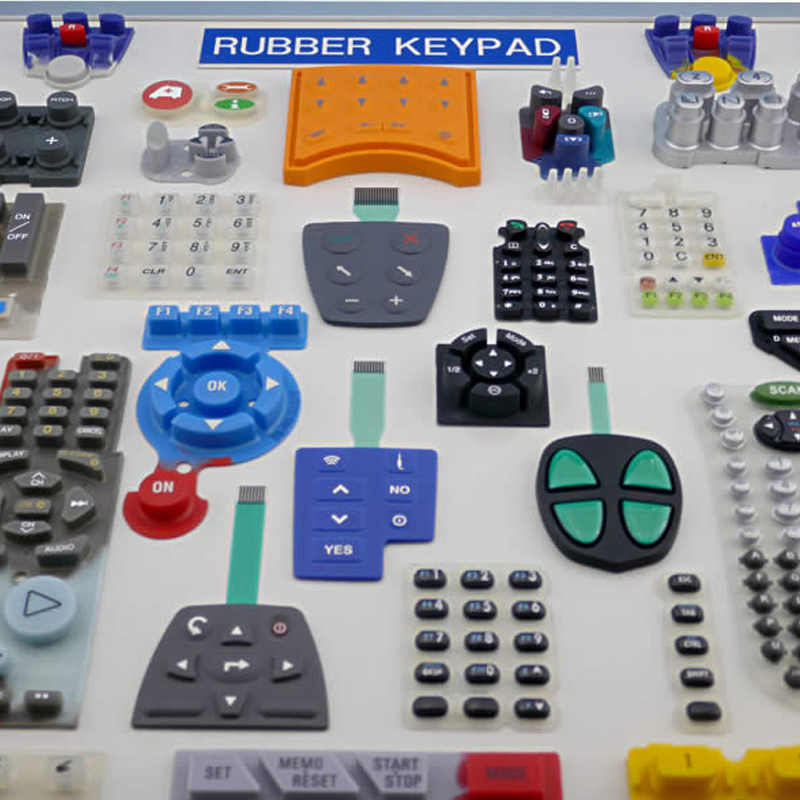
Silicone elastomer is the foundation of nearly all high-performance rubber keypads. It combines elasticity, toughness, and stability in ways that many traditional polymers cannot. Unlike standard plastics, silicone maintains its properties under extreme conditions, making it the material of choice for industries ranging from automotive controls to medical devices and industrial machinery.
Key properties include:
- Thermal Stability – Performs reliably across wide temperature ranges, ensuring consistent actuation force whether used in a car dashboard in summer or an outdoor industrial controller in winter.
- Chemical Resistance – Maintains structural integrity in environments exposed to oils, solvents, and other aggressive agents.
- Biocompatibility – Safe for applications requiring skin contact or frequent sterilization, such as medical equipment.
- Flexibility and Resilience – Provides the tactile “snap” and rebound feel that users expect in a high-quality keypad.
This unique balance of performance and adaptability is why silicone elastomer has become the gold standard for HMI solutions across industries.
The Molecular Backbone of Silicone Rubber
At the molecular level, silicone rubber is built on polydimethylsiloxane (PDMS), a polymer chain that alternates between silicon and oxygen atoms. By adjusting the ratio of additives such as carbon, hydrogen, or nitrogen, manufacturers can fine-tune silicone’s hardness, translucency, and conductivity.
This level of material engineering is critical during DFM (Design for Manufacturing). At Milosilicone, our engineers collaborate closely with clients to match the right silicone compound with each product’s functional requirements—whether that means a translucent keypad for backlit displays or a durable, high-actuation keypad for heavy-duty equipment.
What Is a Silicone Rubber Keypad?
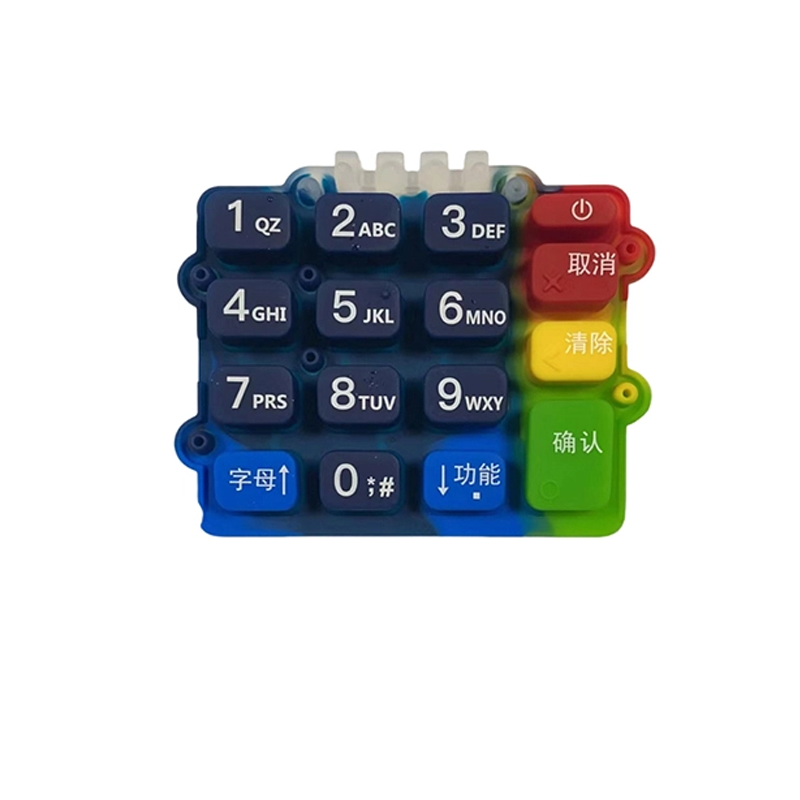
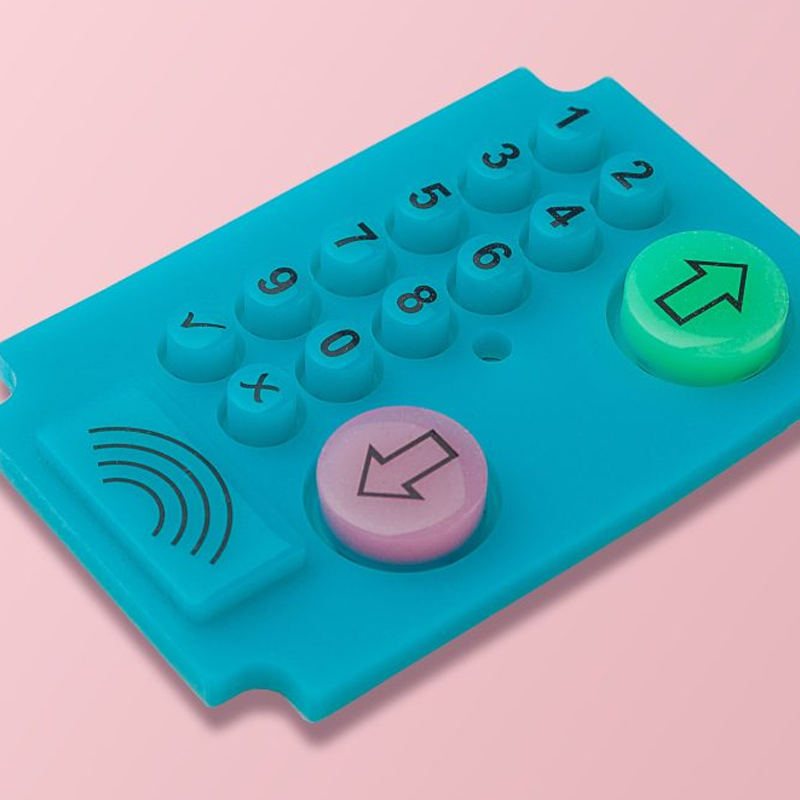
A silicone rubber keypad, also known as an elastomeric keypad or rubber boot, is a flexible interface layer that covers and protects electronic switches underneath. But in reality, it is much more than just a cover:
- It provides tactile feedback, ensuring users know when a button has been successfully pressed.
- It serves as a protective seal, preventing dust, water, and contaminants from reaching sensitive circuitry.
- It enhances aesthetic value, with options for custom colors, backlighting, and branding.
The ability to combine functionality and design makes silicone rubber keypads indispensable across consumer electronics, automotive dashboards, industrial machinery, and medical devices.
Transparent vs. Colorized Silicone Elastomer
When it comes to appearance and backlighting, there are two major categories:
- Colorized Silicone Keypads
- The most common type, produced in virtually any Pantone-matched color.
- Multiple colors can be co-molded, meaning the color is part of the material itself, not just a surface treatment.
- Provides consistent branding while maintaining durability.
- Transparent or Translucent Silicone Keypads
- Essential for backlit applications where text, symbols, or artwork must glow in low-light conditions.
- Achieved by using translucent silicone compounds and advanced laser etching techniques.
At Milosilicone, our one-stop service includes full testing of light diffusion, ensuring that backlit designs are both efficient and visually appealing.
Laser Etching: Precision for Backlit Keypads
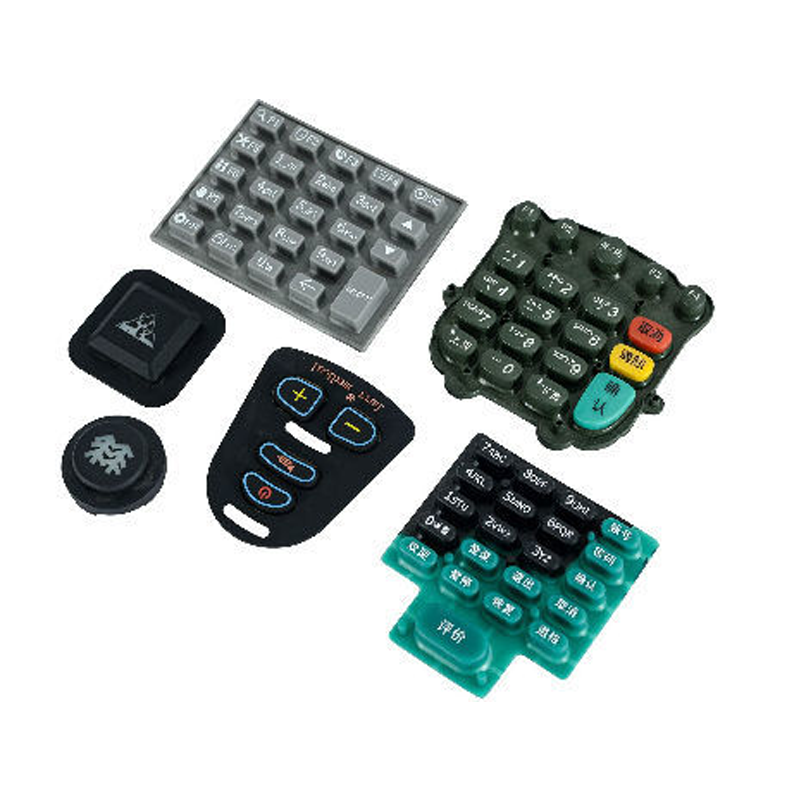
One of the most critical processes in modern keypad manufacturing is laser etching. Using a CNC-controlled laser, we selectively burn away surface paint to reveal translucent silicone beneath. This technique allows for:
- Sharp, durable icons and lettering.
- Precise backlit text and symbols without color bleeding.
- Fast and economical customization compared to alternative methods.
Because laser etching relies on precision, Milosilicone invests heavily in advanced equipment and custom fixtures to ensure every etched keypad meets high quality manufacturing standards.
Pad Printing: Affordable Branding Solutions
Not all keypads require backlighting. For many applications, pad printing remains a practical and cost-effective method for adding text, logos, or symbols to silicone surfaces. The process involves transferring ink from a plate to the keypad, with options for:
- Single or multi-color printing.
- Protective coatings (urethane or epoxy) to prevent wear.
- High-volume, consistent results.
Pad printing offers excellent flexibility in OEM service, allowing businesses to incorporate branding at lower costs without sacrificing durability.
Key Factors in Custom Silicone Keypad Design
Designing a keypad isn’t just about choosing colors or adding logos. It requires careful attention to function, ergonomics, and manufacturability. Some of the most important factors include:
- Actuation Force – Typically 200–300±30 grams, determined by slope, thickness, hardness, and uniformity of the key webbing.
- Hardness (Shore A) – Generally 50–60 for durability and flexibility. Higher hardness increases actuation force but risks brittleness if not balanced properly.
- Durability – Wear resistance, UV stability, and environmental sealing for long-term reliability.
- Ergonomics – The tactile feel and rebound that ensure a satisfying user experience.
At Milosilicone, we leverage our DFM expertise to help clients optimize these factors early in development, avoiding costly redesigns and ensuring smooth transition to mass production.
Why Partner with Milosilicone?
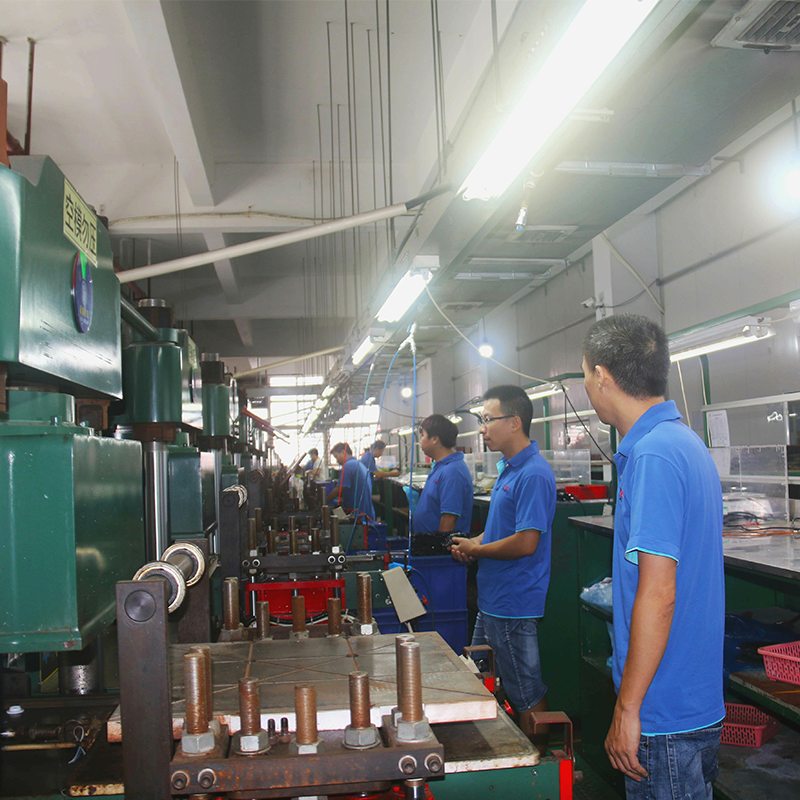
As a specialized silicone keypad factory in China, Milosilicone provides much more than manufacturing—we deliver end-to-end solutions:
- OEM Service – Fully customized designs tailored to your brand and application.
- One-Stop Service – From material selection and tooling to surface finishing and assembly.
- DFM Support – Early engineering input to ensure designs are optimized for cost-effective, high-quality production.
- High Quality Manufacturing – Advanced molding, printing, and etching technologies under strict ISO-certified processes.
- Global Supplier Network – Reliable partnerships to ensure fast lead times and scalable capacity.
Whether you’re designing a new automotive control interface, a medical device keypad, or an industrial HMI panel, Milosilicone combines the expertise, infrastructure, and dedication needed to bring your ideas to life.
Final Thoughts: Let’s Build Better Keypads Together
Designing and manufacturing silicone rubber keypads is both a science and an art—one that requires not just technical know-how but also a deep understanding of user experience. At Milosilicone, we’re proud to serve as a trusted OEM supplier and one-stop service partner, helping clients worldwide turn their ideas into reliable, high-performance keypads that stand out in the market.
If your business is looking for a factory partner in China with proven experience in DFM, high-quality manufacturing, and customized solutions, we’d love to hear from you. Let’s work together to design the next generation of silicone keypads that deliver both performance and brand impact.