
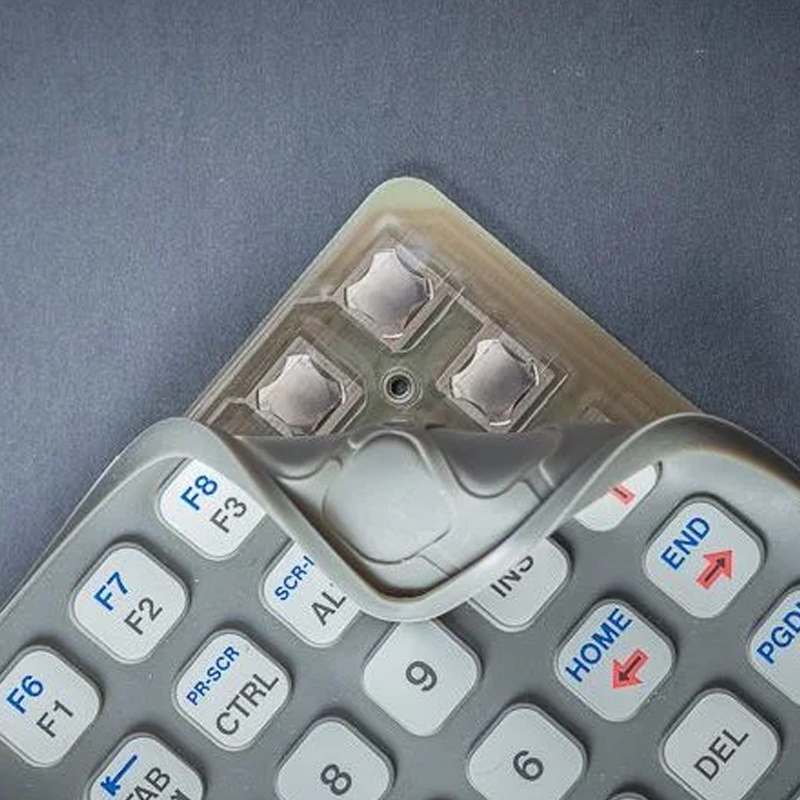
Are you designing a control panel and wondering whether capacitive switches are the right choice for your next product? At Flykeyboard, we get that question a lot from OEMs, product engineers, and procurement teams. As a factory and manufacturer focused on delivering high quality human-machine interfaces, we’ll walk you through what a capacitive switch is, how it works, its design tradeoffs, and why this technology often outperforms traditional solutions in industrial and medical environments. If you need a one-stop service—from design and prototyping to mass production and supplier coordination—our engineering team can help you evaluate options and deliver a tailored custom service package that meets your specification and compliance needs.
What a capacitive switch is — the concept in plain terms
A capacitive switch is an electronic tactile interface that senses touch or proximity by measuring changes in capacitance. Instead of relying on moving parts or mechanical contacts, capacitive switches detect the electrical influence of a conductive object—typically the human finger—on an electric field generated by electrodes embedded beneath the panel surface. Because they require no mechanical movement, capacitive switches enable fully sealed, flat, and easy-to-clean surfaces that are ideal for harsh, sterile, or dust-prone environments.
How capacitive switches work — self and mutual capacitance explained
Capacitive sensing is implemented primarily in two ways: self capacitance and mutual capacitance.
- Self capacitance uses a single sensing electrode that forms a capacitive relationship with ground and nearby conductive bodies. When a finger approaches, the charge-storage behavior of the electrode changes and the controller registers a touch event. Self-capacitance is simple and very sensitive, making it a solid option for single-touch buttons or proximity detection.
- Mutual capacitance uses at least two electrodes arranged in a grid: transmit (TX) and receive (RX) traces. The TX electrode emits an AC signal which couples to the RX electrode with a defined baseline. A finger interrupts this coupling locally and the system detects the change at the intersection of the two electrodes. Mutual capacitance supports multi-touch, precise X-Y location, and robust rejection of noise and environmental interference.
Both approaches depend on a sensor controller that measures tiny changes in capacitance and converts them into digital signals for higher-level logic. Modern capacitive controllers include filtering, baseline tracking, and configurable sensitivity thresholds that dramatically improve stability and false-touch rejection.
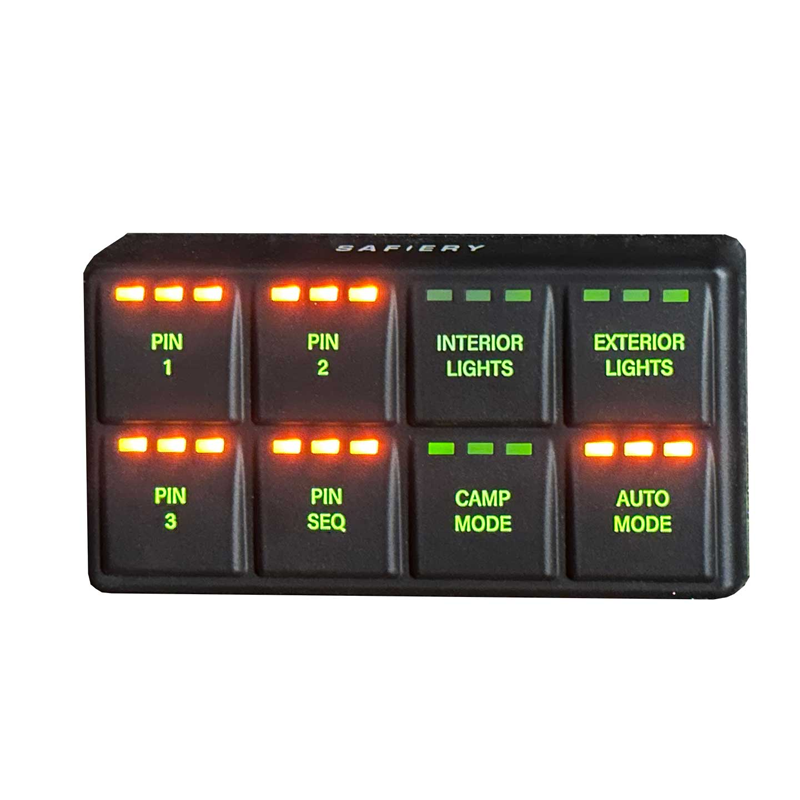
The role of control software and signal processing
The sensor hardware is only half the story. Effective capacitive interfaces require sophisticated firmware and signal processing algorithms. These routines perform tasks like:
- Baseline tracking to compensate for slow changes in the environment or user conditions.
- Noise filtering to reject EMI and mains interference common in industrial settings.
- Debounce and event classification to distinguish intentional presses, multi-touch gestures, and accidental contacts.
- Environmental compensation that adjusts thresholds for humidity, temperature, or when the panel must operate through gloves or thick protective overlays.
At Flykeyboard, we integrate controller firmware with configurable parameters so OEMs can tune sensitivity, hysteresis, and multi-touch behavior without hardware changes. This is a critical part of our custom service offering.
Advantages of capacitive switches for industrial and medical applications
Capacitive switches provide a distinct set of practical benefits:
- Durability: With no mechanical parts to wear out, capacitive interfaces can survive millions of cycles with minimal performance drift.
- Ingress protection: The sensors work through non-conductive overlays such as glass, acrylic, polycarbonate, or even thin metalized coatings, enabling IP65/67-rated panels.
- Hygiene and cleanability: Smooth, sealed surfaces are easy to disinfect and ideal for medical, food, and laboratory equipment.
- Design freedom: Sensors can be hidden under printed graphics or backlit layers, enabling minimalist and aesthetically pleasing panels.
- Advanced input: Multi-touch, gestures, and force-proportional responses expand UI possibilities beyond simple on/off control.
- No mechanical noise: Quiet operation improves operator comfort in control rooms and clinical settings.
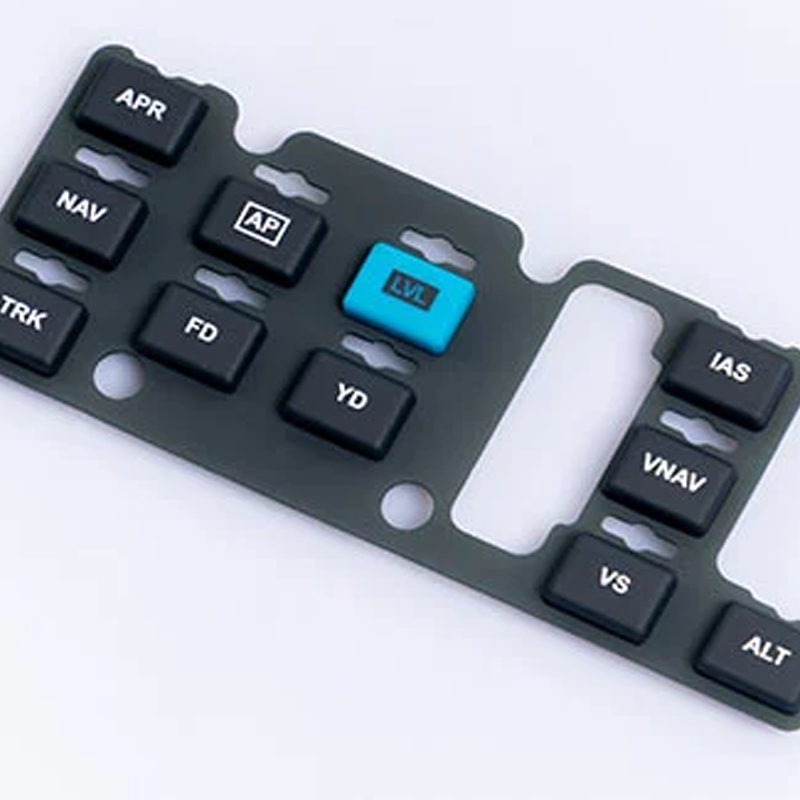
Challenges and practical limitations
Capacitive technology is powerful, but it has design tradeoffs you must consider:
- Sensitivity tuning: Too sensitive and the panel triggers from stray capacitance or water. Too insensitive and normal touches won’t register. Calibrating thresholds across the expected operating envelope is essential.
- Interference: Strong EMI or nearby large conductive structures can upset baseline measurements. Proper grounding, shielding, and layout practices are required.
- Overlay materials: The dielectric constant and thickness of the protective layer affect sensitivity. Thick glass or metal overlays require larger electrodes or stronger drivers.
- Wet or gloved operation: Water and conductive contaminants change baseline capacitance. Special firmware modes, higher TX drive, or mutual capacitance architectures that locate touch more reliably are common countermeasures.
- False positives from objects: If the environment contains other conductive elements (tools, jewellery), designers must implement filtering or debounce logic.
Design considerations for manufacturability and reliability
From a factory perspective, several engineering practices ensure consistent, manufacturable capacitive panels:
- Material selection and supplier coordination: Work with overlay suppliers to select materials with stable dielectric properties and consistent thickness. Flykeyboard’s supplier network ensures we source coatings, cover lenses, and adhesives that meet production tolerances.
- PCB layout and electrode geometry: The electrode size, spacing, and routing determine sensitivity, resolution, and immunity to crosstalk. Proper guard rings and ground planes on the PCB reduce leakage and noise.
- Grounding and shielding: A single-point chassis ground and strategic shields prevent stray currents. Use conductive adhesives or gasket strategies where necessary for EMI-critical equipment.
- Environmental testing: Validate panels against humidity, salt spray, thermal cycling, and prolonged cleaning agents typical in your industry. We include these tests as part of our one-stop service to validate performance before volume production.
- DFM for assembly: Design for automated pick-and-place, controlled adhesives, and consistent lamination to reduce assembly variance and lower defect rates.
Capacitive switches vs. membrane keyboards and mechanical keys
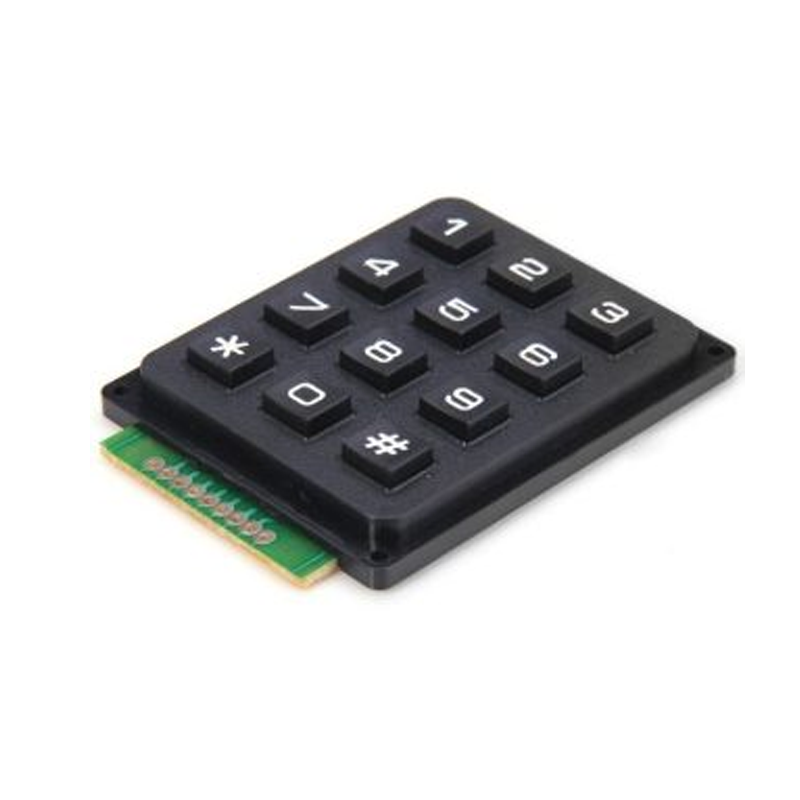
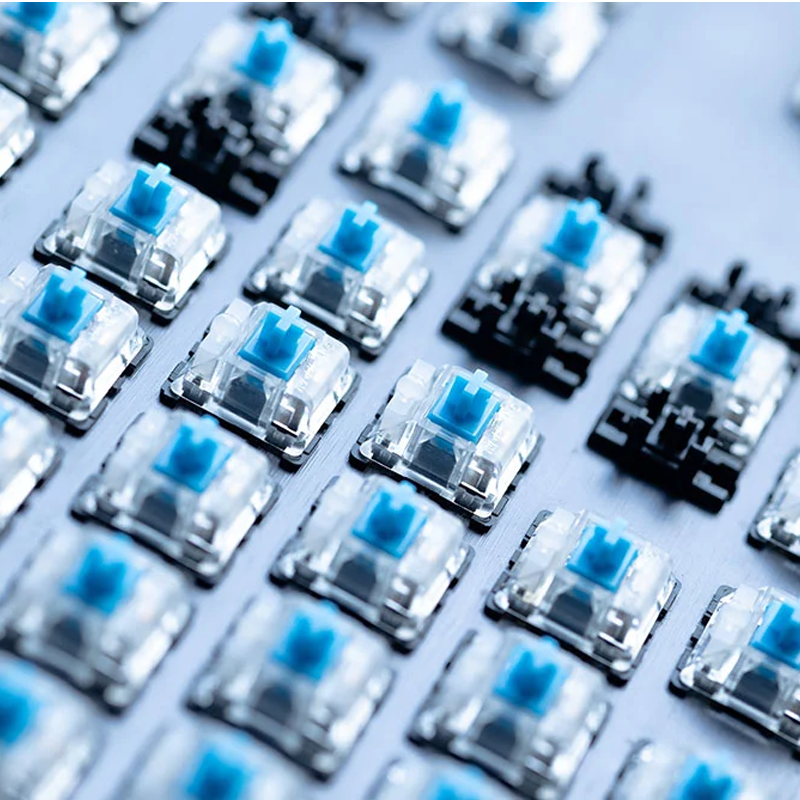
Capacitive switches differ fundamentally from membrane keyboards and mechanical switches. Membranes rely on physical contact to close circuits and are sensitive to mechanical wear and tactile fatigue. Mechanical keys offer clear tactile feedback but require moving parts and sealing challenges. Capacitive switches deliver long life and sealed operation but trade physical tactile feedback for software-driven haptics or audible cues. Our engineering team helps clients choose the right interface—sometimes combining capacitive sensing with secondary tactile feedback mechanisms—for the best end-user experience.
Industrial applications and use cases
Capacitive switches excel across industries:
- Medical devices: Hygiene, cleanability, and ability to operate through protective films are major benefits.
- Laboratory equipment: Precise, repeatable inputs and sealed surfaces reduce contamination risk.
- Industrial control panels: Durable, dustproof panels with glove-friendly modes and configurable sensitivity.
- Consumer appliances: Sleek touch surfaces and multi-function inputs for premium products.
- Automotive & transportation: In-cab controls with backlighting and gesture capability.
Why work with Flykeyboard — our factory approach
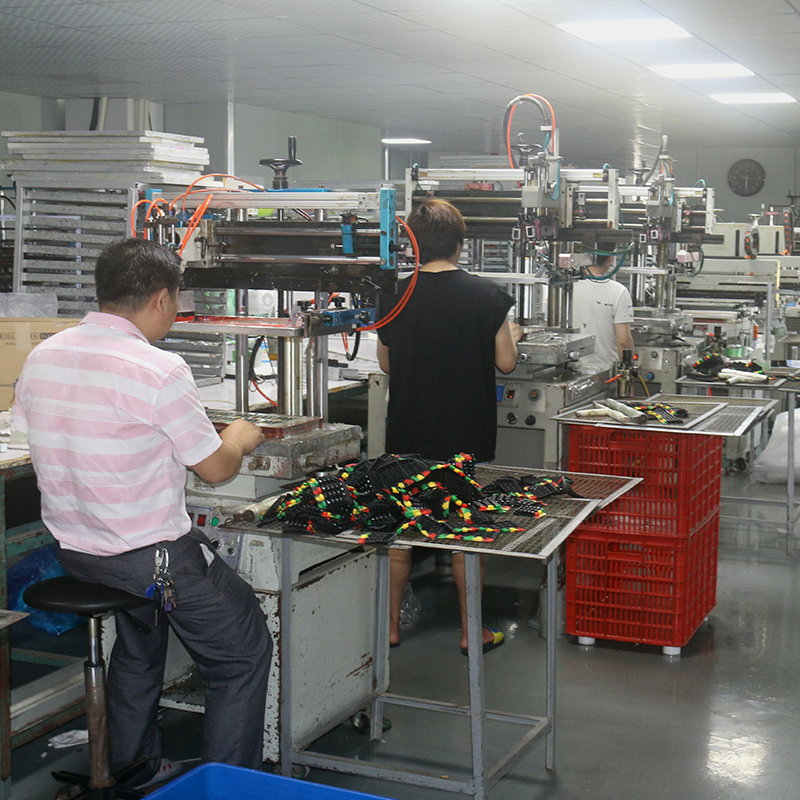
At Flykeyboard we integrate design, prototyping, and volume manufacturing into a single manufacturing workflow. Our one-stop service includes electrode PCB design, controller firmware development, supplier qualification for overlays and adhesives, environmental testing, and final assembly. We coordinate with trusted suppliers to source high-quality components and we provide OEMs with full documentation and production support. Whether you need a rapid prototype or high-volume production runs, our custom service teams deliver robust, production-ready solutions that meet regulatory and environmental demands.
Final thoughts and next steps
If you’re considering capacitive switches for your product, let’s talk. At Flykeyboard, we pair practical factory know-how with application-level design advice to ensure your capacitive interface performs reliably in the real world. Contact us for a design review, a prototype run, or a quote for full-scale manufacturing. Our goal is to help you bring a high quality, manufacturable, and user-friendly control panel to market—fast and with minimal risk.