
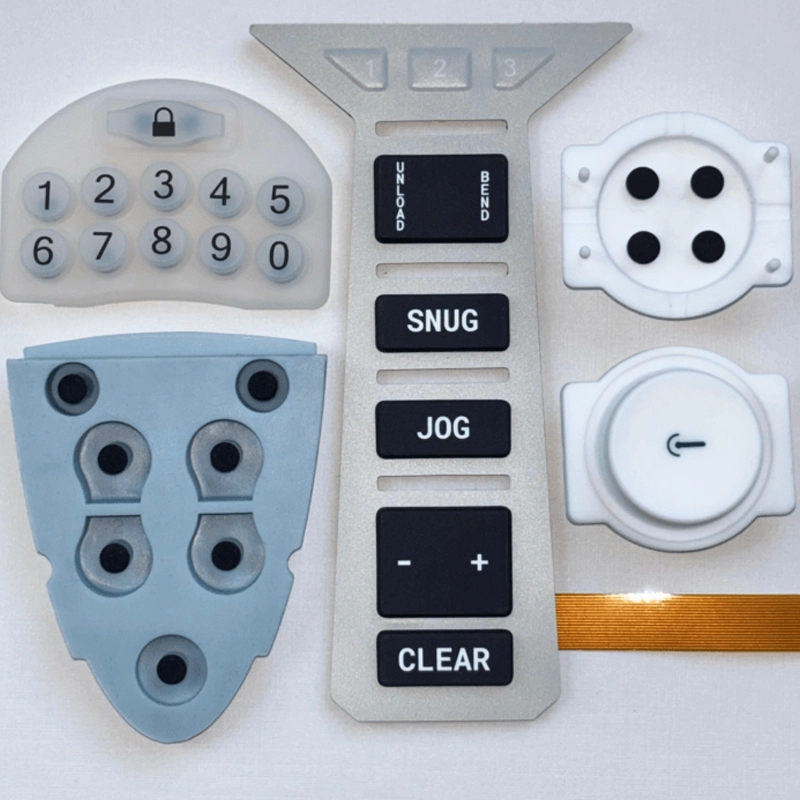
At Flykeyboard, a specialist in custom silicone rubber keypads and membrane interfaces, we help OEMs and industrial suppliers choose overlay systems that survive long-term outdoor UV exposure while preserving legibility, tactile feel, and long-term reliability. UV stability is a critical selection factor for graphic overlays used with rubber keypads—especially in outdoor controls, kiosks, medical equipment, and industrial instrumentation. This article explains the technical trade-offs, tests to validate performance, and practical material and process recommendations for B2B buyers.
UV exposure challenges for rubber keypad overlays
Graphic overlays on rubber keypads must resist several UV-driven failure modes:
- Color fading & pigment breakdown — inks and dyes degrade, causing legibility loss.
- Yellowing and embrittlement — polymer substrates can discolor, crack, or stiffen.
- Ink delamination and rubbing off — printed artwork loses adhesion under weathering and abrasion.
- Surface chalking and loss of gloss — harms both aesthetics and readability.
Selecting the right overlay material, inks, coatings, and adhesives—and validating them with accelerated weathering tests—prevents costly field failures.
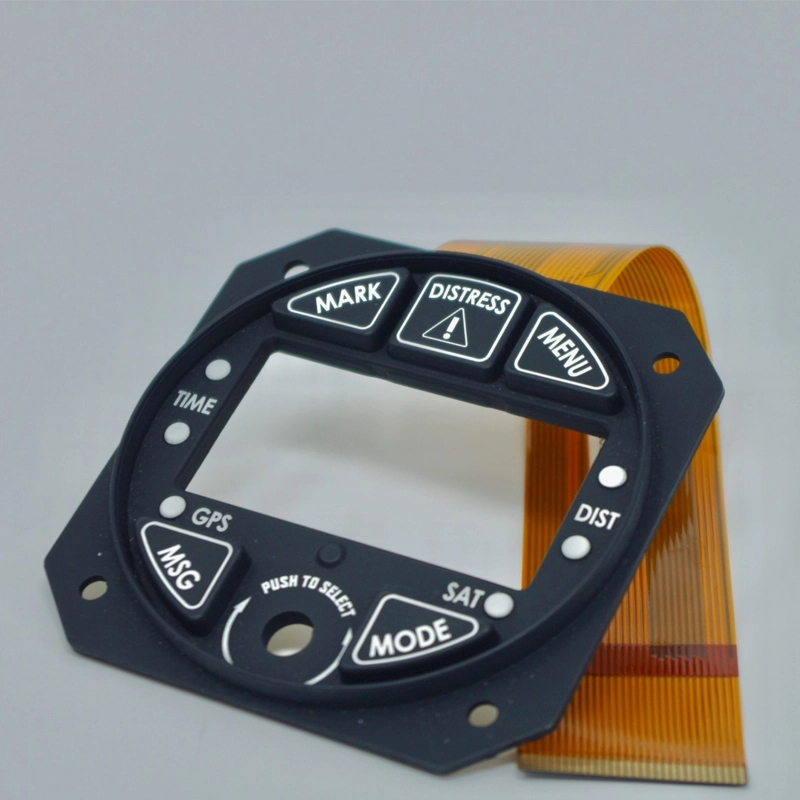
Candidate materials and their UV performance
Polycarbonate (PC) with UV hardcoat
Polycarbonate is a high-impact, dimensionally stable film that performs very well when combined with a durable UV hardcoat. Hardcoated PC resists abrasion, preserves gloss, and protects printed inks from oxidation. For long-term outdoor use, hardcoated PC is often the top choice.
Pros: excellent impact resistance, good temperature range, proven outdoor life when hardcoated.
Cons: higher cost than PET; base PC can yellow if not properly coated.
Polyester (PET) with UV-stable formulation
PET is economical and has good chemical resistance. PET films formulated with UV stabilizers and protected with a durable overcoat can provide 3–5 years of outdoor life in moderate climates.
Pros: low cost, excellent dimensional stability, easy to print.
Cons: lower abrasion resistance than hardcoated PC; longer exposures may cause fade.
Acrylic (PMMA) and UV-grade acrylic films
Acrylics resist yellowing and maintain clarity; however, they’re less flexible and more brittle compared with PC and PET. Acrylic overlays are suitable when optical clarity and UV performance are priorities and mechanical impacts are limited.
Coated aluminum and metal overlays
For extreme UV and mechanical abuse, thin anodized aluminum or stainless-steel overlays with laser-etched legends (filled with UV-stable inks) outperform polymer films. They are heavier and costlier but offer decades of life in harsh outdoor installations.
Silicone (for integrated overmolded keys)
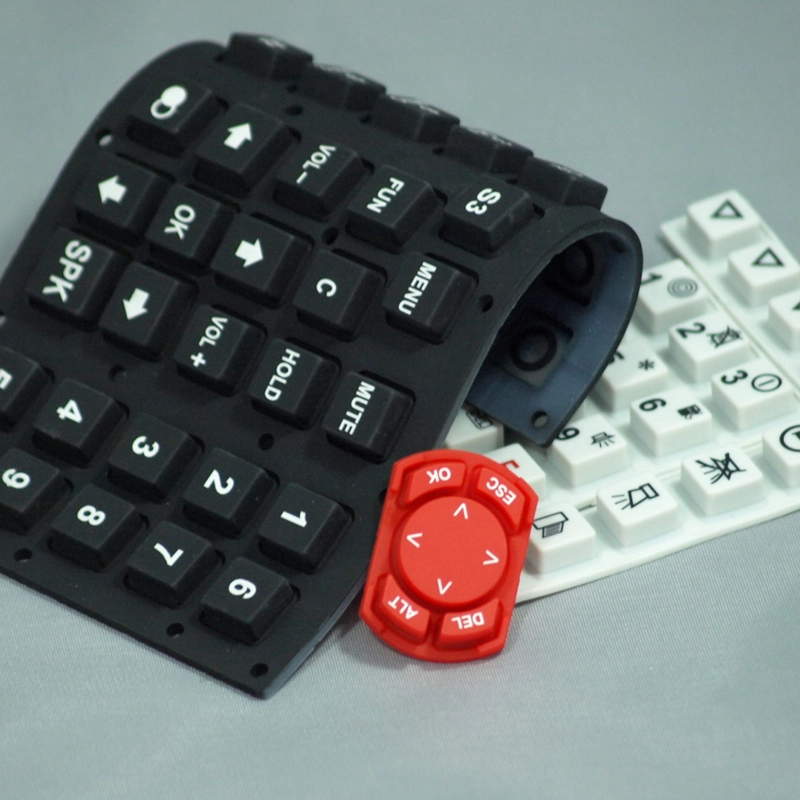
If your design uses custom silicone rubber keypads, pigments and silicone formulations with UV stabilizers can be used. Silicone inherently resists UV better than many commodity plastics, making overmolded legends a strong choice for certain outdoor tactile controls—particularly where the legend is molded (not printed) or printed with durable silicon-specific inks and sealed.
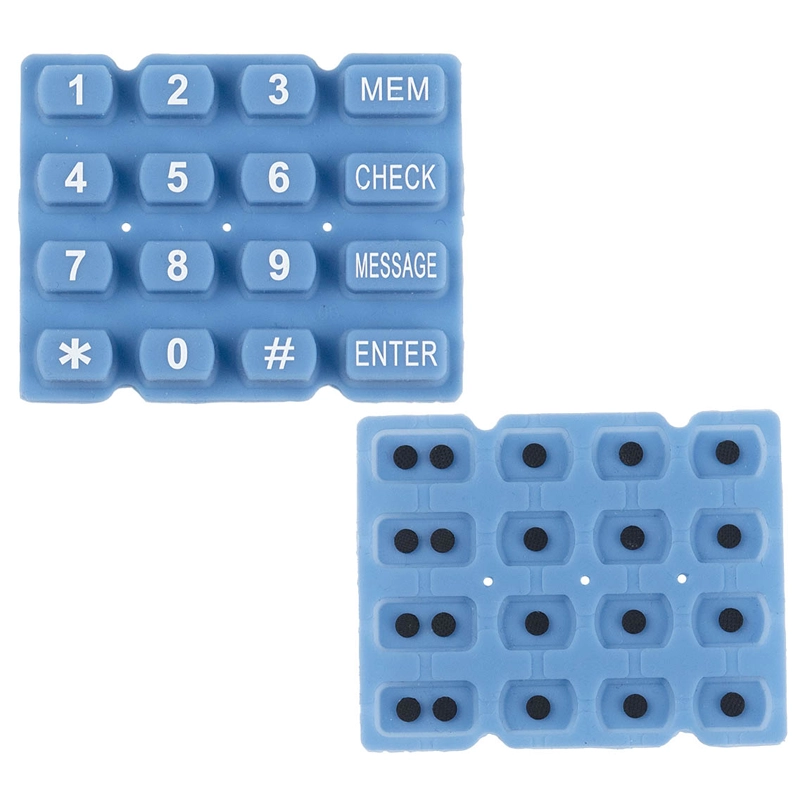
Printing systems, inks, and coatings that matter
Material selection must be paired with robust ink systems and protective coatings:
- UV-curable inks with pigments proven for outdoor permanence (check ASTM lightfastness ratings).
- Screen printing vs. digital: screen printing with baked or UV-cured inks is still the industry standard for outdoor overlays.
- Topcoats / hardcoats: acrylic or polyurethane hardcoats significantly improve abrasion and UV resistance; specialty silicone-compatible topcoats exist for overmolded applications.
- Anti-graffiti and anti-reflective coatings can be considered based on end-use.
Adhesives, lamination & bonding to rubber keypads
Lamination methods and adhesive choice affect long-term performance:
- Use UV-stable pressure-sensitive adhesives (PSA) compatible with both the overlay substrate and rubber keypad elastomer.
- Thermal or mechanical bonding methods are available for rigid overlays and metal plates.
- For silicone keypads, consider permanent silicone-based adhesives or overmolding to avoid adhesive aging failure.
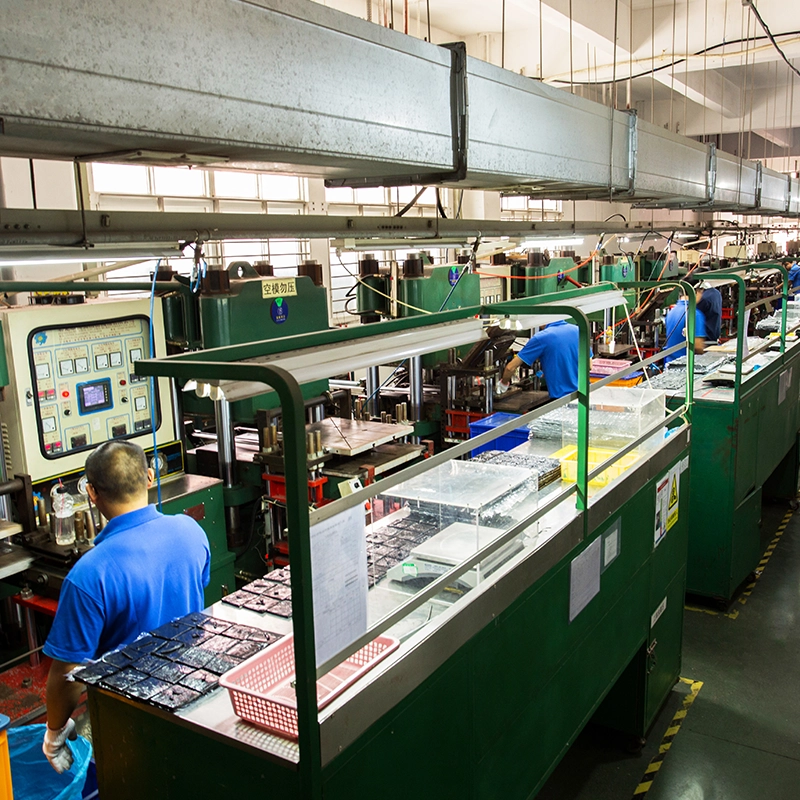
Testing and validation: what to require from suppliers
Require accelerated and real-world validation:
- QUV / Xenon arc weathering (500–2000 hours depending on expected life) to predict color change (ΔE), chalking, and gloss loss.
- ASTM G154 / G155 protocols for comparative data.
- Abrasion / rub tests (e.g., Taber, Crockmeter) for printed legend durability.
- Adhesion tests, crosshatch and peel testing, and salt/fog exposure if installed in coastal environments.
- Provide ΔE thresholds and functional pass/fail criteria (legibility, tactile function) in the procurement spec.
Practical recommendations
- For outdoor industrial controls requiring multi-year life and impact resistance: hardcoated polycarbonate overlay + UV-curable screen printed inks + polyurethane hardcoat.
- For cost-sensitive but still outdoor-rated applications: UV-stabilized PET with durable topcoat, accepting shorter lifecycle.
- For extreme environments and longest life: anodized aluminum with laser etching and UV-stable ink fill.
- For integrated rubber solutions: custom silicone rubber keypads with molded legends or silicone-specific UV-stable inks and protective topcoats.
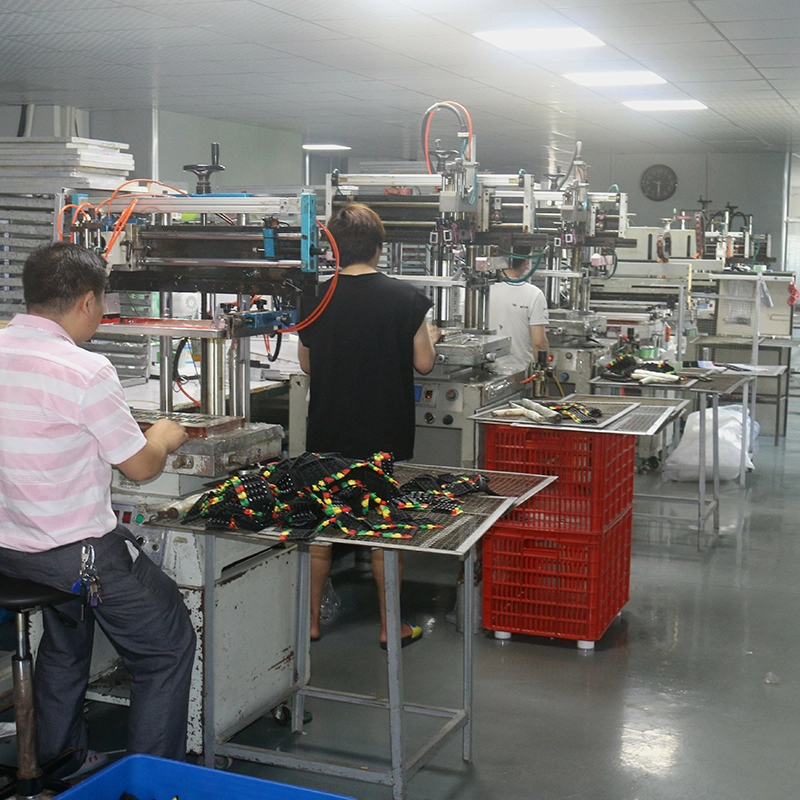
Manufacturing and one-stop service considerations
At Flykeyboard, we provide a one-stop service that bridges design, materials selection, prototyping, accelerated testing, and full-scale manufacturing of overlays integrated with custom silicone rubber keypads. Our custom service packages include mold design, ink formulation selection, QUV testing, and supply-chain-ready bonding/assembly methods—minimizing launch risk for our B2B partners.
Conclusion and next steps
Selecting the best graphic overlay material for UV-exposed rubber keypads depends on environment, budget, and desired service life. Hardcoated polycarbonate is the most robust polymer option; anodized metals and silicone-based integrated solutions are alternatives for the most demanding applications. Always validate with standardized accelerated weathering and adhesion tests before production buy-offs.
If you’re evaluating overlays for a new keypad product or need a supplier who can handle overlay design, testing, and production together with keypad manufacturing, Flykeyboard is ready to help. Contact our engineering team for material samples, QUV test reports, and a tailored proposal for your project. Let’s specify a solution that keeps your legends legible and your controls reliable for years in the field.