
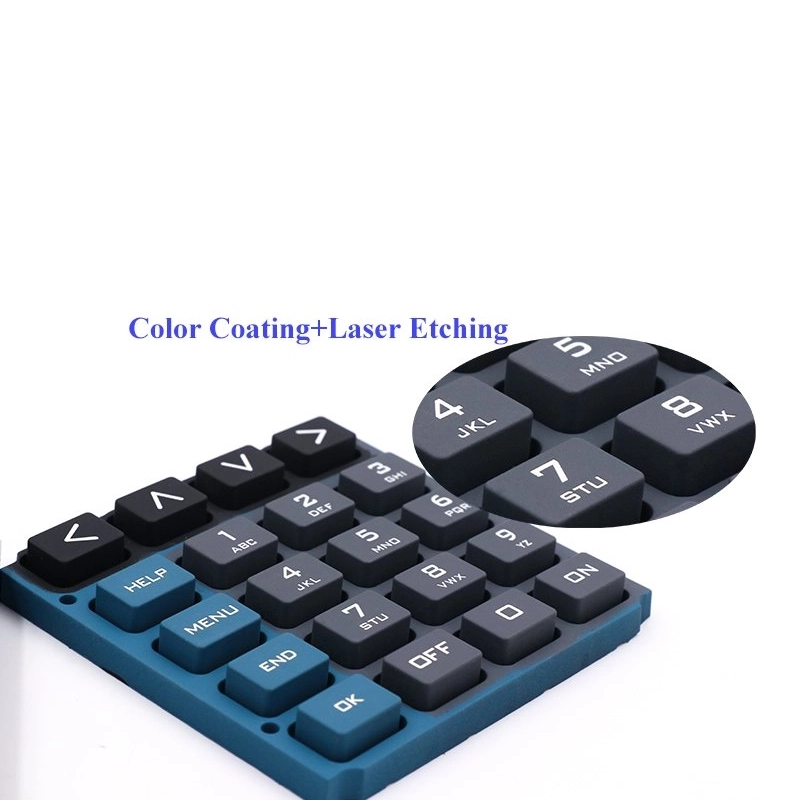
At Flykeyboard, we help brands and product teams create high-performance silicone rubber keypads that combine durability, legibility, and a premium user experience. One of the most effective finishing methods for modern keypads is laser etching. It is widely used when a product needs backlighting, long-lasting legends, and a cleaner, more professional appearance. For any manufacturer or factory producing custom input solutions, understanding this process is essential.
What Is Laser Etching on Silicone Rubber Keypads?
Laser etching is a marking process that uses a focused laser beam to remove the top layer of paint or coating from a keypad surface. In most cases, the keypad begins with a dark outer layer, often black. When the laser passes over selected areas, it burns away that top layer and exposes the lighter color beneath.
This creates a sharp contrast between the legend and the surrounding surface. The result is a keypad that is easier to read, more attractive, and better suited for illuminated applications.
Unlike standard printing, laser etching does not rely on ink sitting on the surface. Instead, it reveals the legend by removing material. That makes it a stronger option for products that will face frequent use, cleaning, abrasion, and exposure to demanding environments.
Why Laser Etching Is Popular for Silicone Rubber Keypads
Laser etching has become a preferred choice for many silicone rubber keypad projects because it offers both visual appeal and functional value.
Better Backlighting Performance
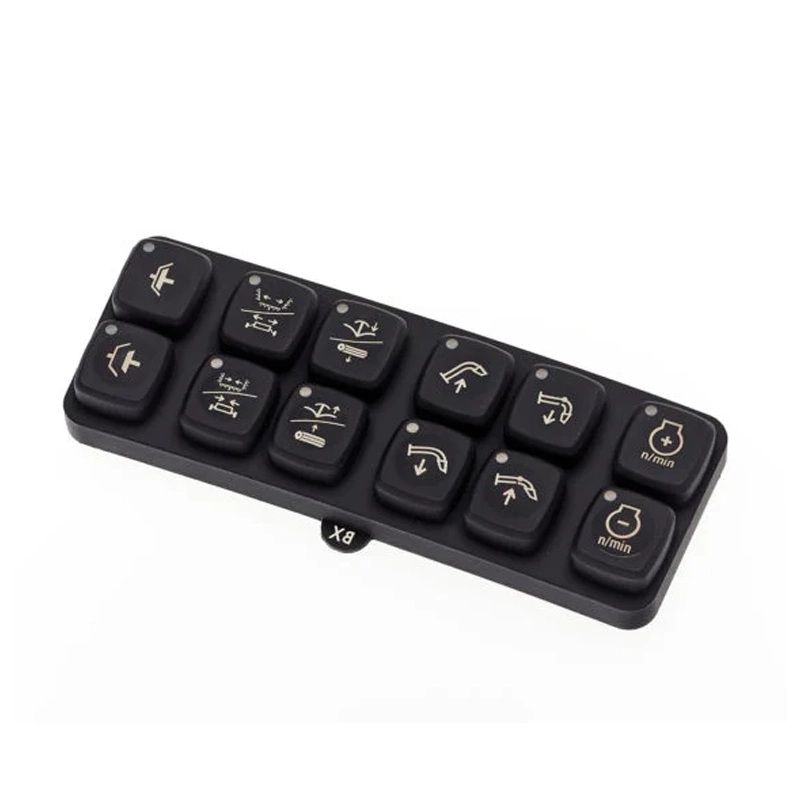
One of the biggest advantages of laser etching is its compatibility with backlit designs. Because the laser removes only the top layer, light can pass through the exposed areas and illuminate the legends. This makes the keypad much easier to use in low-light conditions.
For products that use LED backlighting, laser etching can produce a strong, clean, and evenly lit effect. This is especially valuable for control panels, medical devices, industrial equipment, automotive interfaces, and consumer electronics.
Improved Durability
Printed legends can wear off over time, especially on products that are pressed thousands of times. Laser-etched legends are more durable because the marking is created by removing coating rather than applying ink.
This helps the keypad maintain its appearance and readability over a longer product life cycle. For a manufacturer focused on high quality and reliability, that is a major advantage.
Premium Appearance
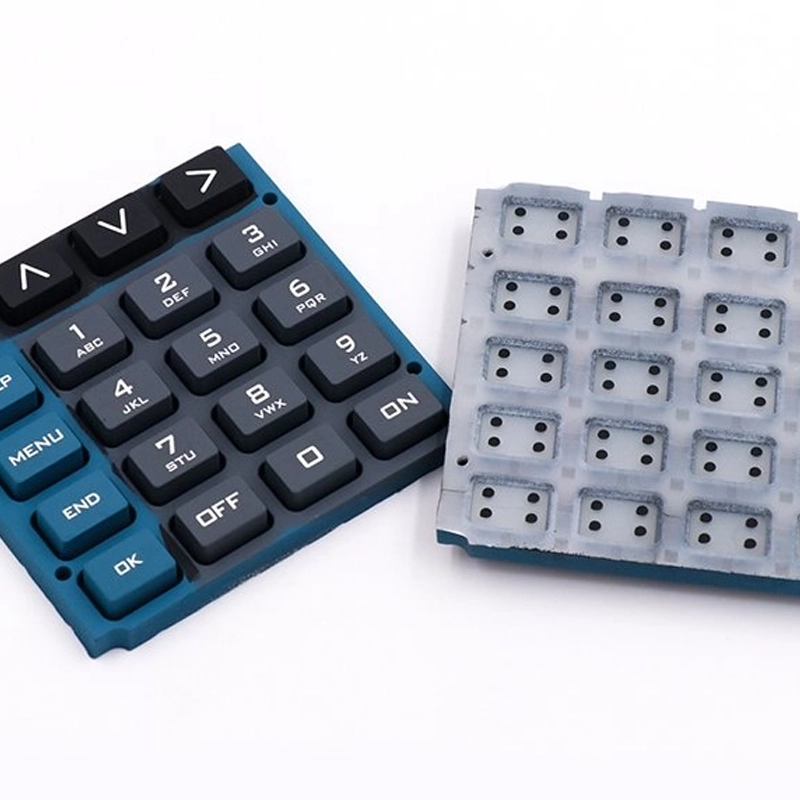
Laser etching gives the keypad a more refined and technical look. The high contrast, clean edges, and illuminated effect can make a product feel more advanced and more professional. That is why many brands choose this process when they want to elevate the overall design of their interface.
How Laser Etching Is Performed
The process usually follows several key steps.
1. Surface Preparation
The keypad is first molded and then coated with a colored paint layer. In many designs, the base material underneath is lighter in color. This contrast is what makes the laser etching visible after processing.
2. Laser Programming
The legend design is converted into a laser path. The manufacturer programs the laser system so it removes the coating only in the areas that form letters, numbers, symbols, or icons.
3. Precision Laser Removal
A high-powered laser moves across the keypad surface and removes the top layer with very high precision. The operator controls speed, power, and focus to ensure clean edges and consistent depth.
4. Inspection and Quality Control
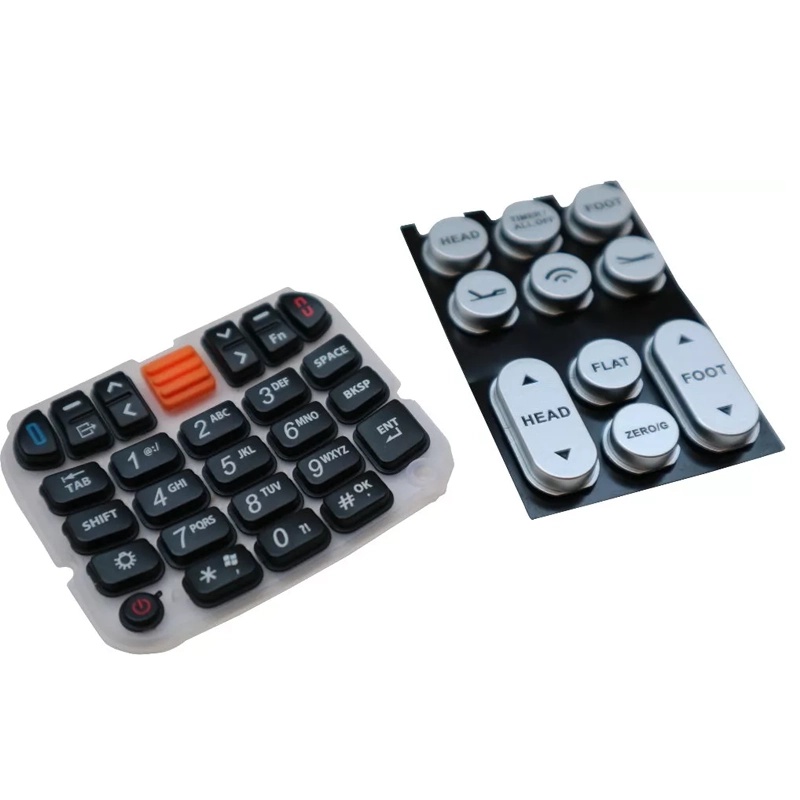
After etching, the keypad is checked for clarity, accuracy, and uniformity. The legends must be readable, properly aligned, and free from burn marks or uneven exposure.
5. Optional Protective Coating
In some projects, a protective topcoat is added after etching to improve wear resistance or chemical resistance. This is often used in demanding industrial or medical applications.
Laser Etching vs. Traditional Printing
Many buyers compare laser etching with pad printing or screen printing. Each method has its place, but laser etching offers several clear benefits for custom silicone key buttons.
Printed legends are usually faster and lower cost at the start, but they can fade or rub off over time. Laser etching is more suitable when the product needs stronger backlighting, longer life, and a more durable finish.
For a factory producing premium keypad solutions, the choice often depends on the end-use application. If the keypad is decorative or lightly used, printing may be enough. If it must perform in a tough environment or support illumination, laser etching is often the better option.
Applications for Laser-Etched Silicone Rubber Keypads
Laser etching is used across a wide range of industries.
- Medical devices that need clear markings and strong backlighting
- Industrial controls where the keypad must remain readable under heavy use
- Automotive systems that require nighttime visibility
- Consumer electronics that benefit from a sleek, modern look
- Telecom and security equipment where durability is important
In all of these cases, the combination of silicone material, coating, and laser marking creates a reliable and attractive user interface.
Why Work With an Experienced Manufacturer
Laser etching is only as good as the keypad design behind it. A skilled manufacturer must consider material selection, coating thickness, legend contrast, tactile feel, and backlight performance from the start.
At Flykeyboard, our factory provides full custom service for keypad development, including material selection, mold design, surface finishing, printing, laser etching, and final assembly. This one-stop approach helps ensure that the keypad meets both performance and appearance requirements.
When you are sourcing silicone rubber keypads, it is important to work with a factory that understands not only molding, but also the full finishing process. That is how you achieve consistent quality, stable production, and a product that performs well in the real world.
Conclusion
Laser etching is a highly effective way to improve the appearance, durability, and backlighting performance of silicone rubber keypads. It creates crisp legends, supports illuminated designs, and offers better long-term wear resistance than many traditional printing methods.
For brands developing custom silicone key buttons or advanced interface products, laser etching can be an excellent choice when visibility and durability matter most.
At Flykeyboard, we specialize in manufacturing silicone rubber keypads with reliable performance and professional finishing options. If you are planning a new keypad project or comparing marking methods for your product, contact our team. We would be glad to review your design, discuss your goals, and help you choose the right custom solution for your application.