
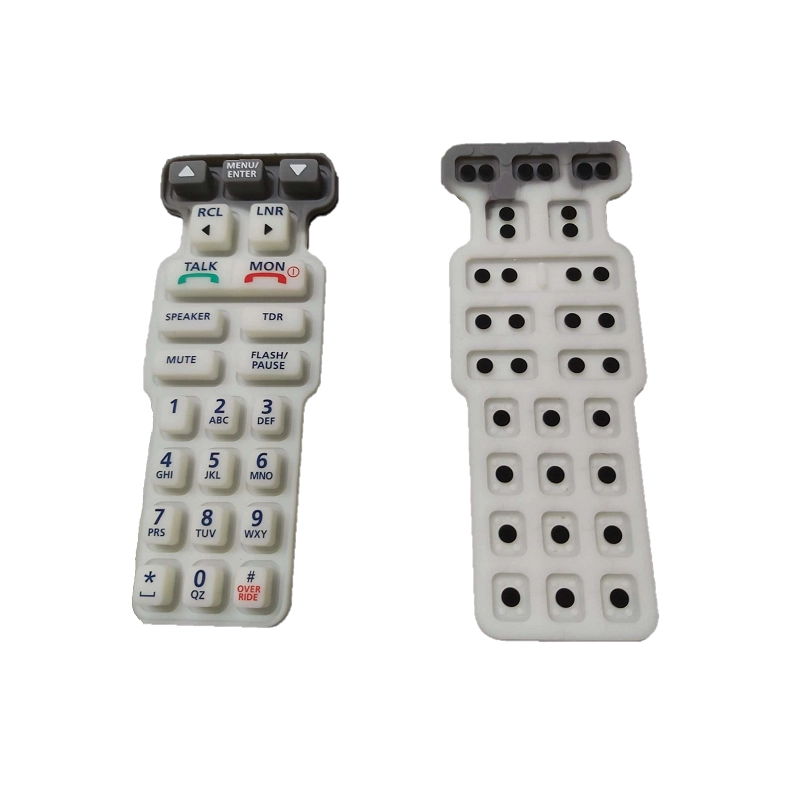
Are you specifying a rubber keypad for a power-assist product (e-bike throttle, powered wheelchair controller, exoskeleton interface, or power tool control) and need a reliable manufacturing roadmap? At Flykeyboard we design and manufacture custom rubber keypads, silicone rubber buttons, and complete input systems for demanding applications. Below is a professional, end-to-end guide to the production technology, process steps, quality controls, and real-world applications for high-performance elastomeric keypads used in power-assist devices.
Power-Assist Devices Rubber Keypad — Overview
Rubber keypads (also called silicone keypads, elastomeric keypads, membrane buttons, or silicone rubber buttons) are the human interface between operator and machine. In power-assist devices they must deliver reliable tactile feedback, long life under repeated use, environmental resistance (water, dust, salt spray), and secure electrical contact for low-voltage control circuits. Typical requirements include IP ratings, long cycle life (100k–1M actuations), colorfastness, and compatibility with conductive pills or metal dome switches when precise electrical contact is required.
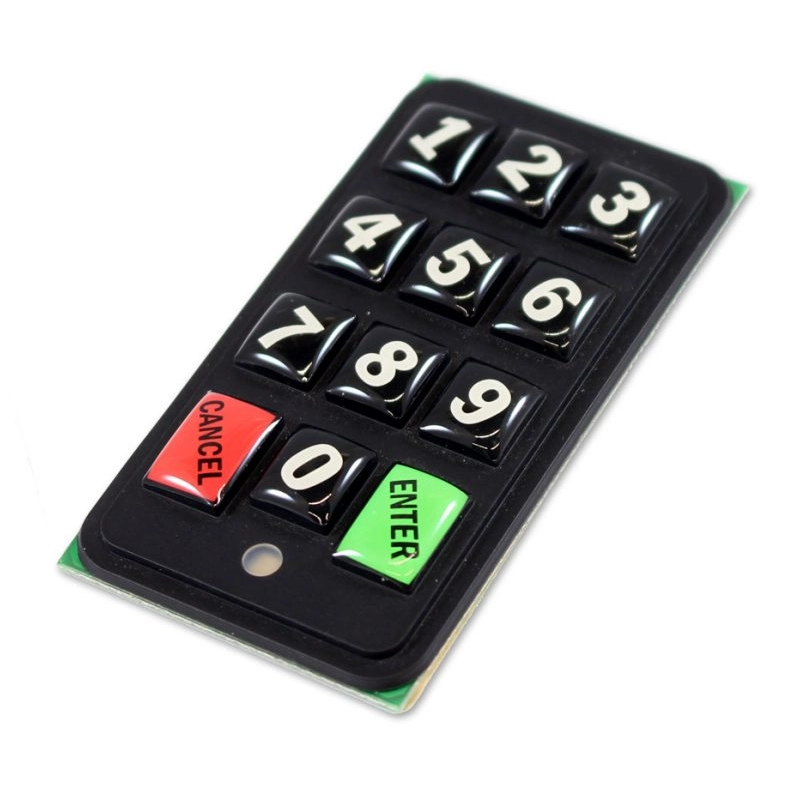
The Specific Production Process Is As Follows:
H3 — 1. Design & Engineering (DFM)
Every successful keypad begins with design-for-manufacture (DFM). Engineers define:
- key geometry and travel, tactile force, and snap ratio
- layout for conductive pads, PCB footprint, and actuator alignment
- material selection (LSR vs HCR, Shore A hardness 20–70)
- color, surface texture, and backlighting windows
- sealing approach for IP requirements and EMI considerations
Flykeyboard provides simulation support for tactile curves and ergonomic review to ensure the keypad meets human factors and electrical requirements.
H3 — 2. Tooling & Moldmaking
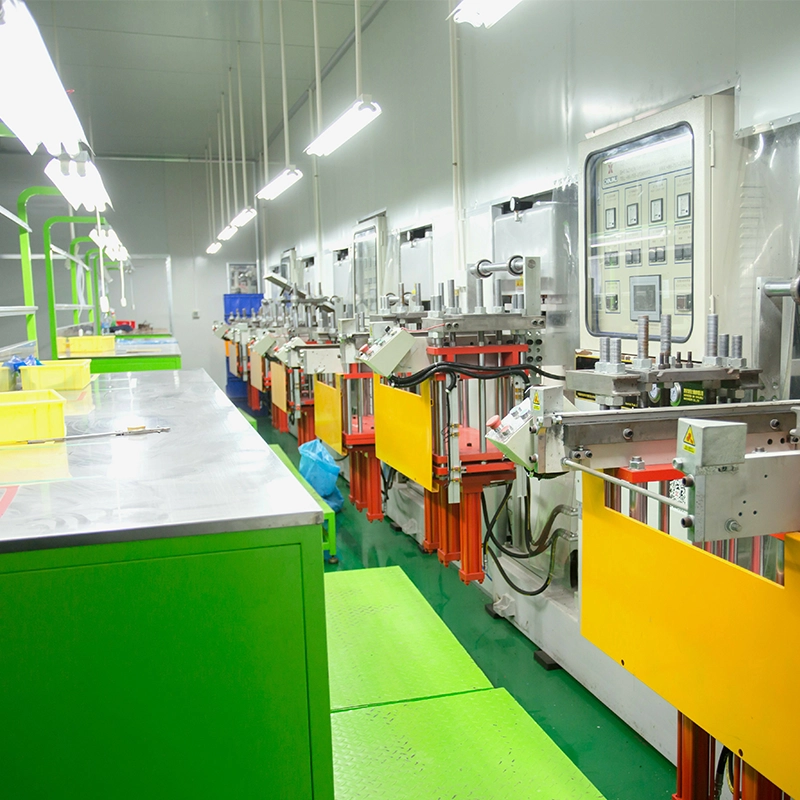
Tooling quality determines slit precision, dome profile, and consistent wall thickness. For high volumes we use hardened, precision multi-cavity molds optimized for silicone rubber injection molding (LSR). For lower volumes or prototypes we may employ compression or transfer molds. Tool features include gas vents, hot-runner cold-slug wells, and insert pockets for overmolding onto plastic housings.
H3 — 3. Material Preparation & Compounding
Material choice is critical:
- Liquid Silicone Rubber (LSR) for tight tolerances, medical/clean applications, and fast automated cycles.
- High Consistency Rubber (HCR) or solid silicone for die-cut seals or small runs.
Compounds can be custom-formulated for UV resistance, flame retardancy, low VOCs, or specific durometer. Color matching is done via controlled pigment dosing and spectrophotometry.
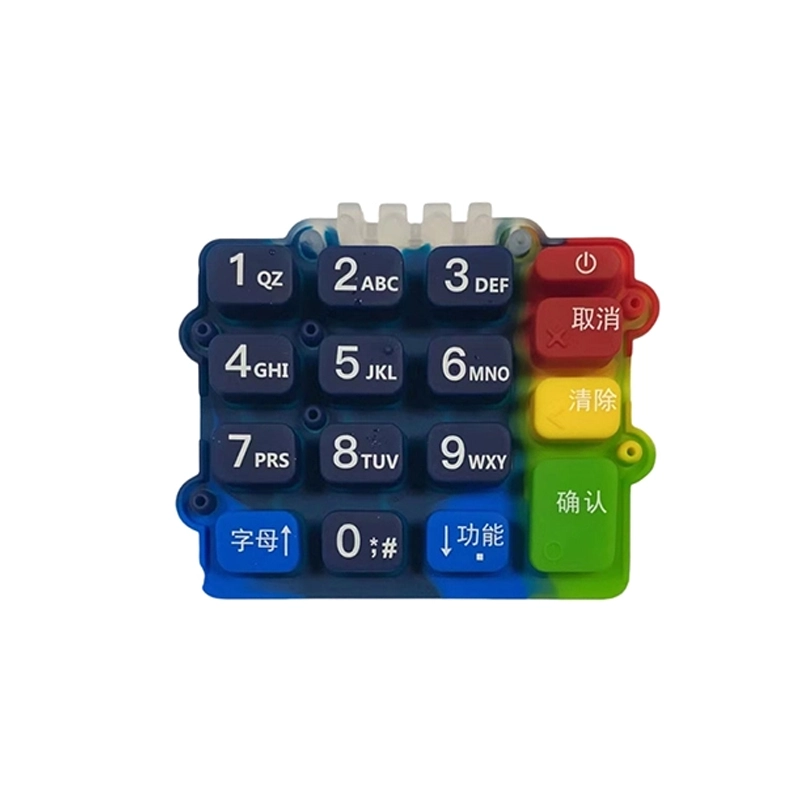
H3 — 4. Molding & Overmolding
Two primary routes:
- LSR Injection Molding: Metered, heated LSR is injected into cavities; ideal for thin features, complex domes, and integrated backlit windows.
- Compression/Transfer Molding: Used for thicker parts or when tooling budget is constrained.
For integrated assemblies, we overmold silicone onto rigid housings or insert-mold silicone around LEDs, metal clips, or plastic bosses to create sealed, tamper-resistant modules.
H3 — 5. Post-Cure and Secondary Processing
After molding parts are post-cured to stabilize mechanical properties and reduce volatiles. Secondary operations may include:
- trimming and deflashing (automated or manual)
- laser etching, pad printing, or tampo printing for legends and icons
- PVD or selective coating for enhanced abrasion resistance on high-wear keys
- application of conductive carbon or silver-palladium pills (for contact) or press-in metal domes when higher contact reliability is required
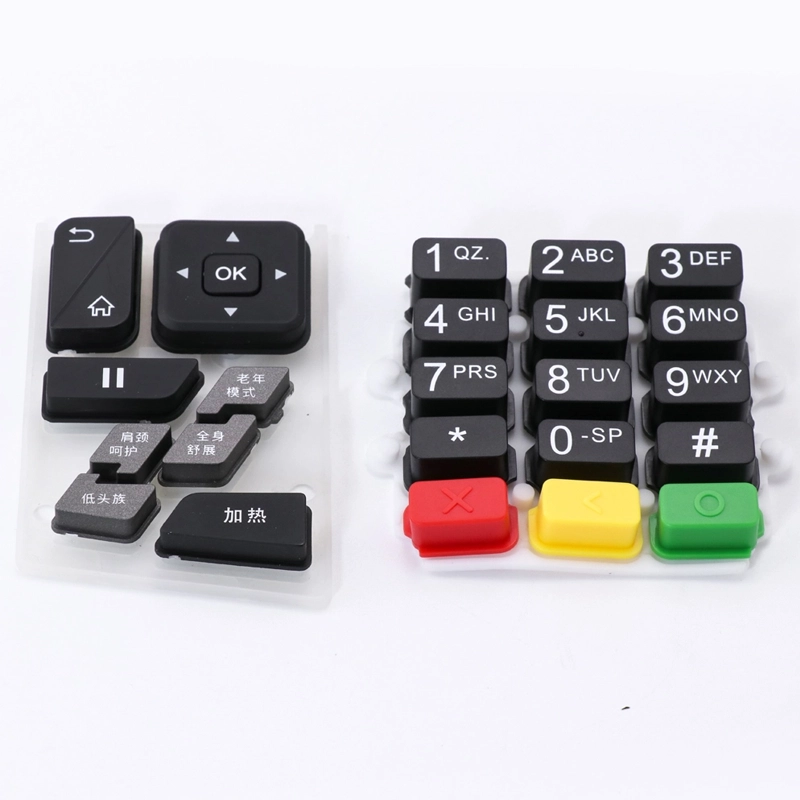
H3 — 6. Assembly & Integration
Keypads are integrated with PCBs and enclosures. Assembly steps may include:
- placement of conductive pills or metal domes
- adhesive bonding or mechanical snap-in to PCBs/housings
- wiring harness or FPC connection
- installation of backlight LEDs or light guides for illuminated keys
H3 — 7. Testing & Quality Assurance
We perform rigorous testing tailored to power-assist use cases:
- Electrical: continuity, contact resistance, debounce characteristics
- Mechanical: actuation force, travel, tactile response, cycle life (up to millions)
- Environmental: IPX dust/water, salt spray, thermal cycling, UV exposure
- Chemical: resistance to cleaning agents, oils, perspiration
- Dimensional: AOI, CMM checks, and statistical process control (SPC) on key tolerances
Flykeyboard documents batch traceability, material CoAs, and testing reports for every production lot.
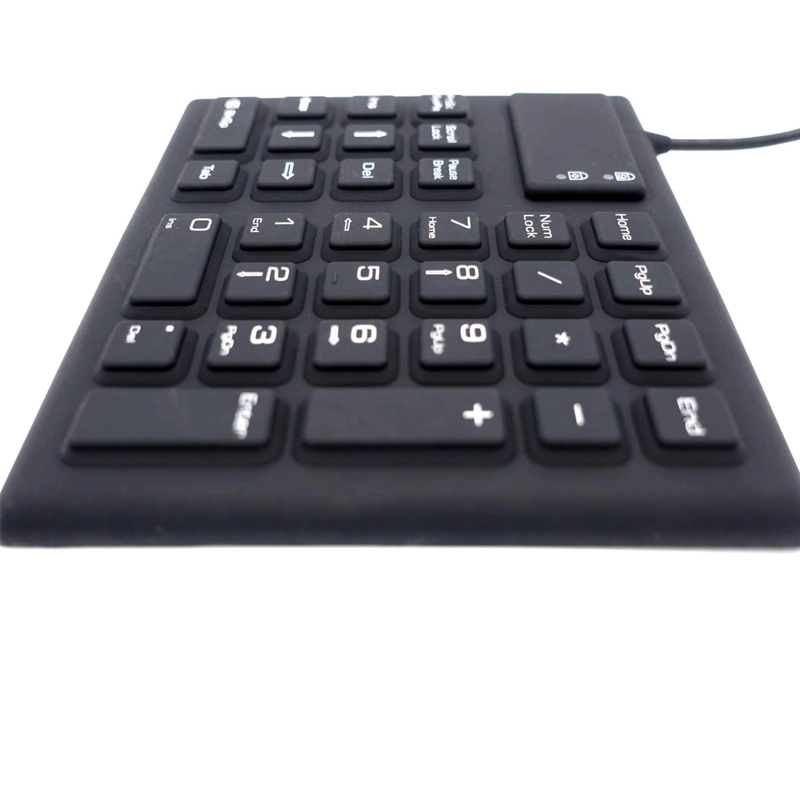
Applications
Rubber keypads made to these standards are used across power-assist product categories:
- Personal mobility: powered wheelchair joysticks, control panels, and handsets.
- E-mobility: e-bike throttle modules, display controls, and handlebar switches.
- Exoskeletons & wearable assist devices: intuitive, low-profile controls that resist sweat and abrasion.
- Power tools & outdoor equipment: weatherproof keypads with anti-slip textures and long life.
- Medical adjuncts for assisted movement: DOT-rated, biocompatible keypads for clinical devices.
Conclusion
Manufacturing high-performance rubber keypads for power-assist devices is a multi-discipline process: precision design, premium materials, controlled molding, thoughtful finishing, and rigorous testing. As a full-service manufacturer and factory, Flykeyboard offers custom service from prototyping to high-volume production, including integrated OEM solutions and supply chain support. We partner with vetted suppliers for conductive additives, specialty pigments, and PCB assembly to deliver turnkey keypad modules optimized for your device.
If you’d like a feasibility review, sample keypad, or quote for customRubber Keypads or silicone rubber buttons, send us your schematic, target cycle life, and environmental specs. Our engineering team will provide a manufacturable design, test plan, and production timeline so your power-assist device gets the dependable interface it deserves.